
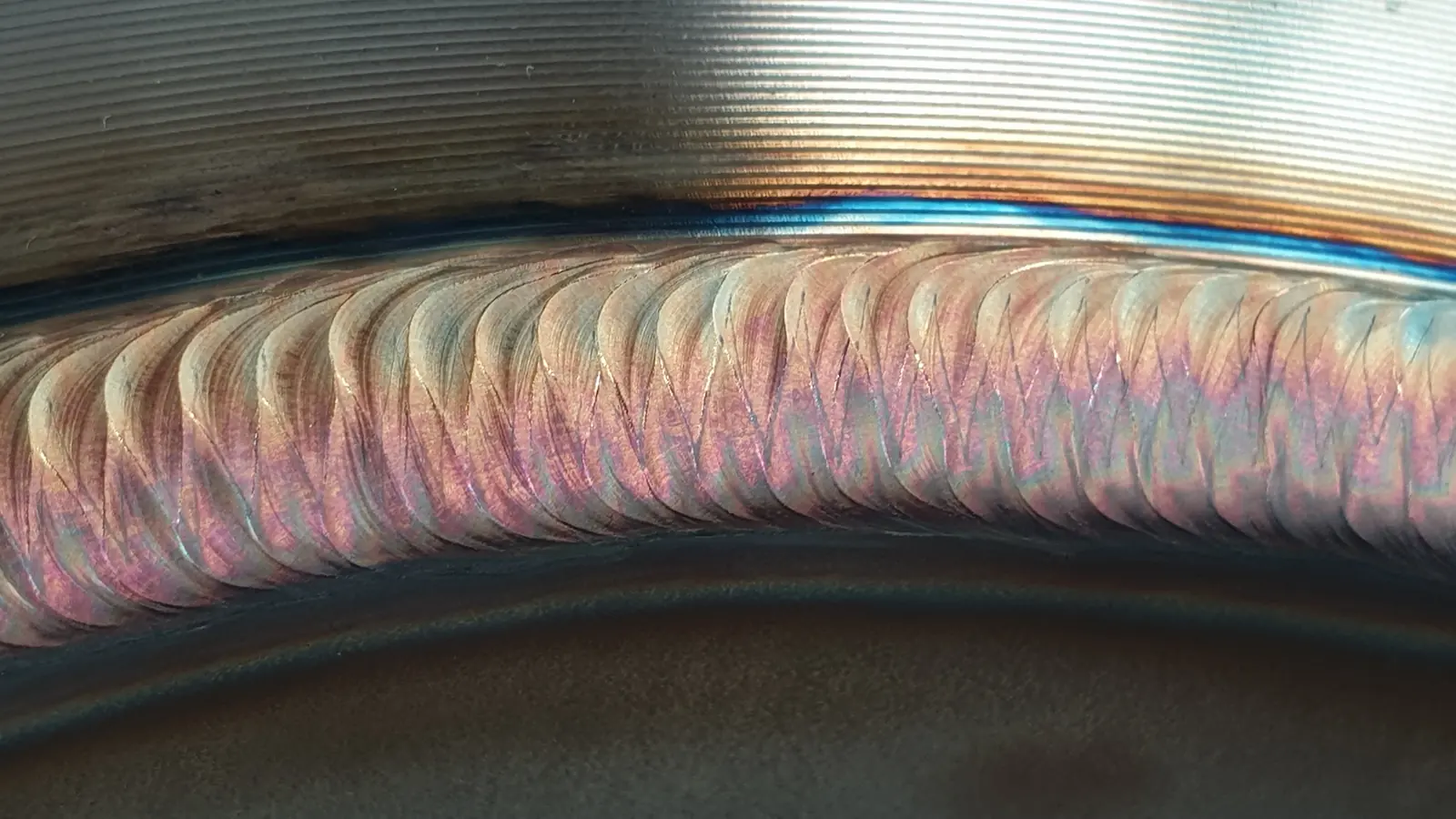
Stainless steel welding: TIG, qualified and high-pressure
Welding is where it is decided whether a fabricated part holds or fails. In stainless steel it is also where the material can lose the very property it was chosen for. We work in the three modes industry demands: qualified, high-pressure and TIG pipe welding.
Qualified welding
For work where the joint has to follow an established procedure and be carried out the same way every time, regardless of who does it or what day it is.
High-pressure welding
For vessels and pipework that will operate under pressure. There is no margin here: the weld bead has to be continuous, free of pores and fully penetrated, because it is all that separates the contents from the outside.
TIG pipe welding with purging and a positioner
This is the most demanding welding we do and the one that makes the difference in food, pharmaceutical and medical gas applications.
- TIG: adds little heat and leaves a clean, controlled weld bead, with no spatter.
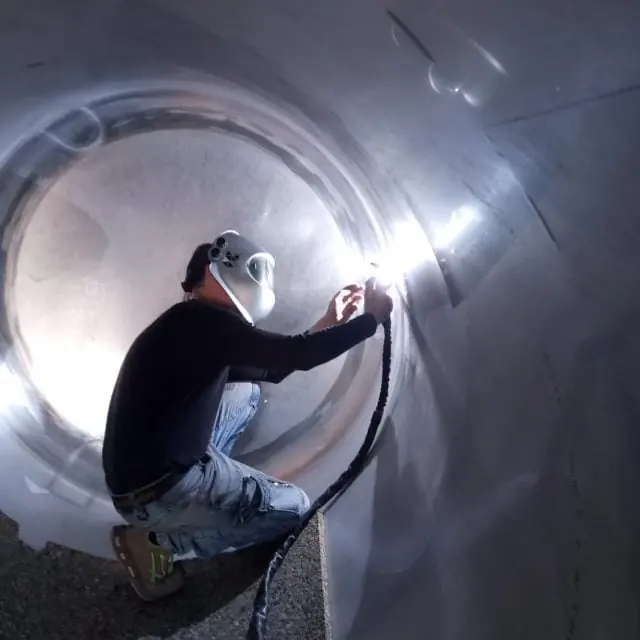
- With purging: gas is injected inside the tube during welding. Without purging, the root oxidises inside: the pipe looks perfect outside and is burnt inside, exactly where the product will flow.
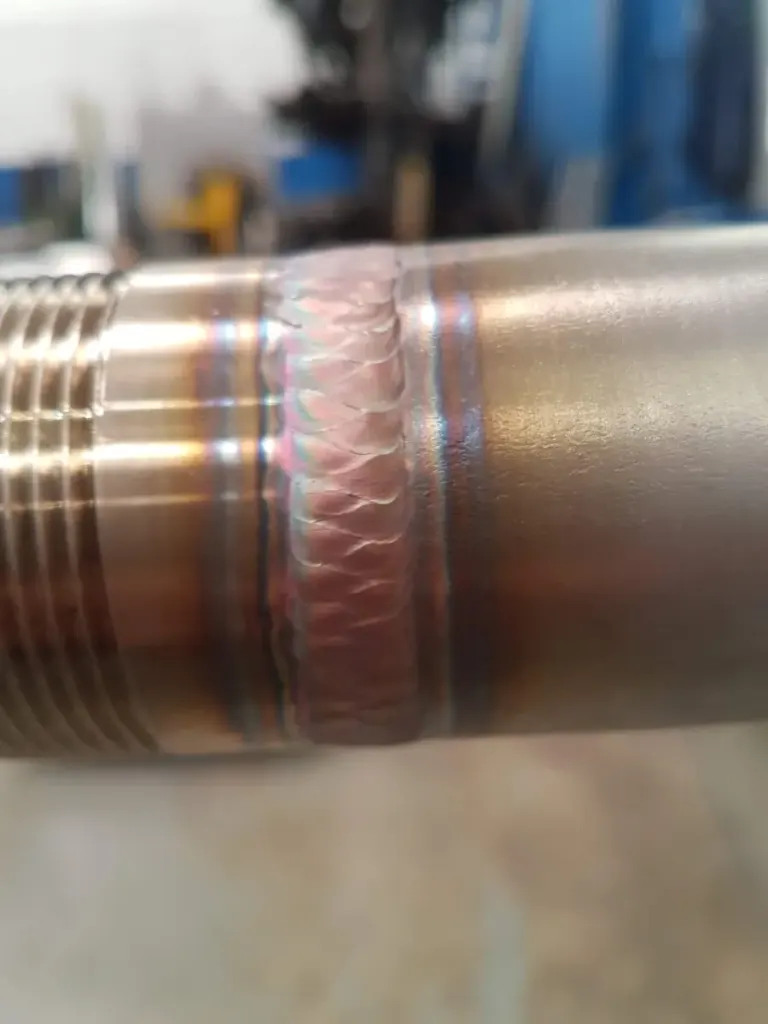
- With a positioner: the tube rotates while the welder holds position. The weld bead comes out uniform all the way round, not just on the easy part.
In process pipework, the weld you can't see inside is exactly the one that determines whether the installation can be cleaned.
Materials
Stainless steel, mild steel, galvanised steel and aluminium. These are the four materials we work with in all our processes.
70% of what leaves our workshop is stainless steel, so that is where we have the most experience. But your project need not be limited to it: many parts combine stainless with mild or galvanised steel, depending on the function of each section.
Each material behaves differently when welded: stainless steel distorts and loses its passive layer around the weld bead, galvanised steel gives off coating fumes and aluminium dissipates heat so quickly that it needs a different approach. Knowing that beforehand is what avoids redoing the part.
After welding, finishing
On stainless steel, welding without treating the area leaves the part half done: the heat leaves a coloured band where the corrosion protection has gone. Pickling and passivation restore it.
Quotation
Tell us what needs welding
Material, thickness and what the part will contain or support. With that we can tell you which procedure suits you.