
Metal surface finishes
A finish is not a coat of make-up applied at the end. On stainless steel it decides whether the part resists corrosion and can really be cleaned; on a sculpture or furniture, it decides how it looks. We offer six finishes on all our work.
The six finishes we offer
Polishing
Leaves the surface smooth and shiny, up to a mirror finish if required. Beyond the visual effect, the smoother the surface the less dirt clings to it: that is why it is requested for decoration and also for process equipment.
Pickling
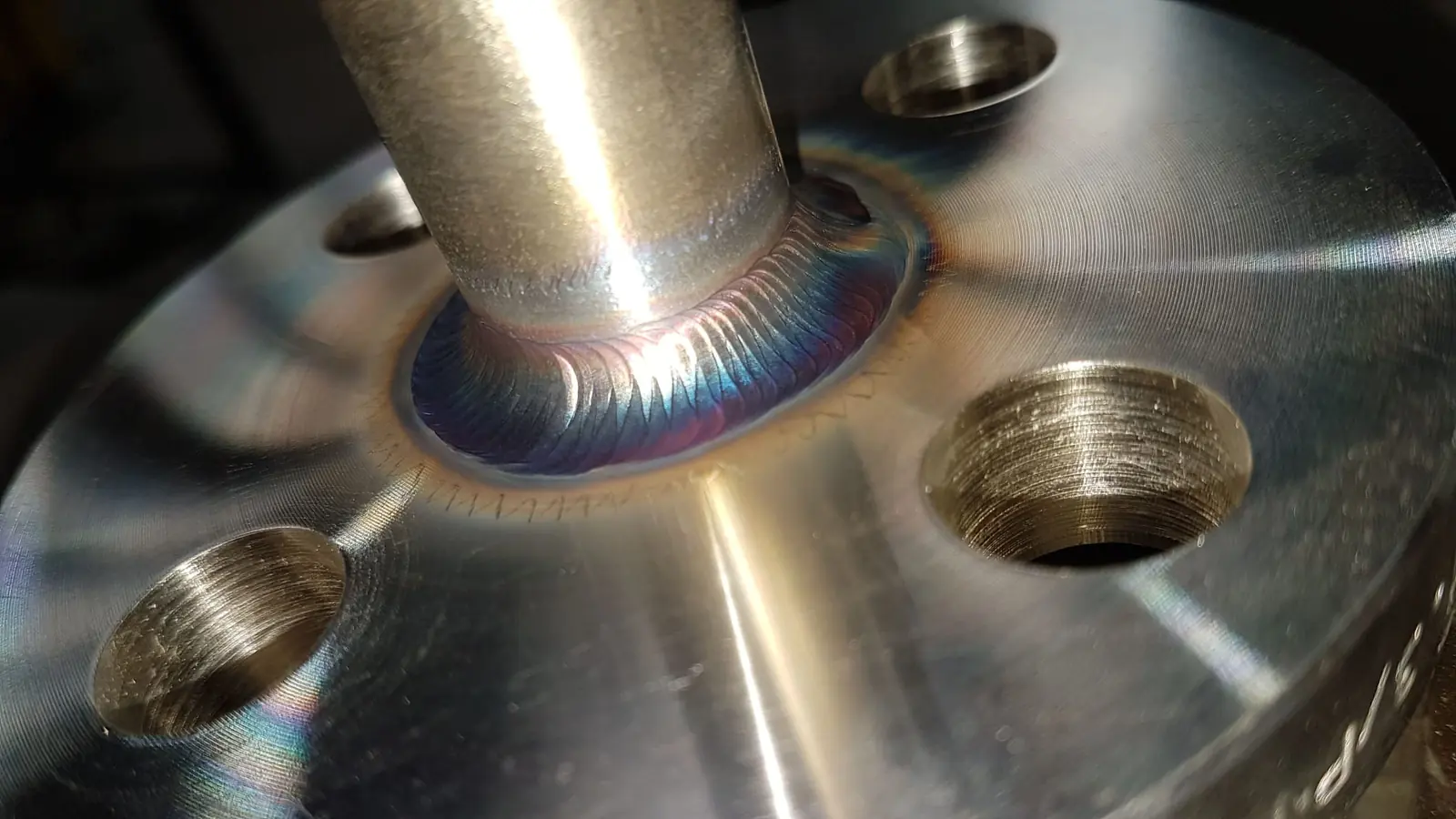
Removes the oxides and discolouration left on stainless steel by welding heat. This operation restores the corrosion resistance that welding removed around the weld bead.
Satin finishing
A uniform matt finish with a directional grain. It is the most common for visible stainless steel: it hides fingerprints and scratches far better than mirror polish and ages well.
Shot blasting
Abrasive is projected onto the surface. It cleans, evens out and leaves a rough matt texture, which also prepares the part to take paint with good adhesion.
Vibratory finishing
Finishing by tumbling in a machine. It is the efficient way to treat many small parts at once: it rounds off burrs and sharp edges without going part by part.
Painting
For mild and galvanised steel, where protection does not come from the material itself. Also when the project requires a specific colour, which is common in street furniture and machinery casings.
Which finish does your part need?
- It will be on view: satin or polished.
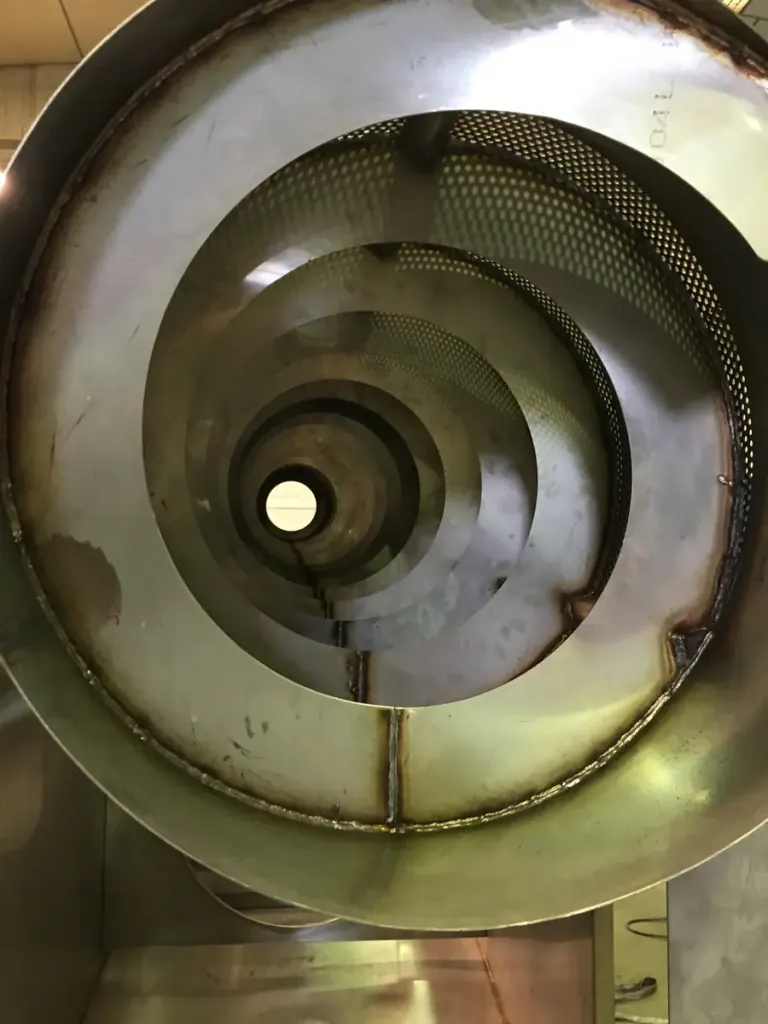
- It will hold food or pharmaceutical product: pickling is essential after welding, plus internal polishing if it needs thorough cleaning.
- It will be outdoors in mild steel: shot blasting and painting.
- Many small parts: vibratory finishing.
- It will be painted later: shot blasting as preparation.
Materials
Stainless steel, mild steel, galvanised steel and aluminium. These are the four materials we work with in all our processes.
70% of what leaves our workshop is stainless steel, so that is where we have the most experience. But your project need not be limited to it: many parts combine stainless with mild or galvanised steel, depending on the function of each section.
A stainless steel part that has been welded but not pickled looks finished and isn't: that is where it will start to rust.
Quotation
Which finish suits you?
Tell us where the part will be and what it will touch, and we will recommend the finish.