
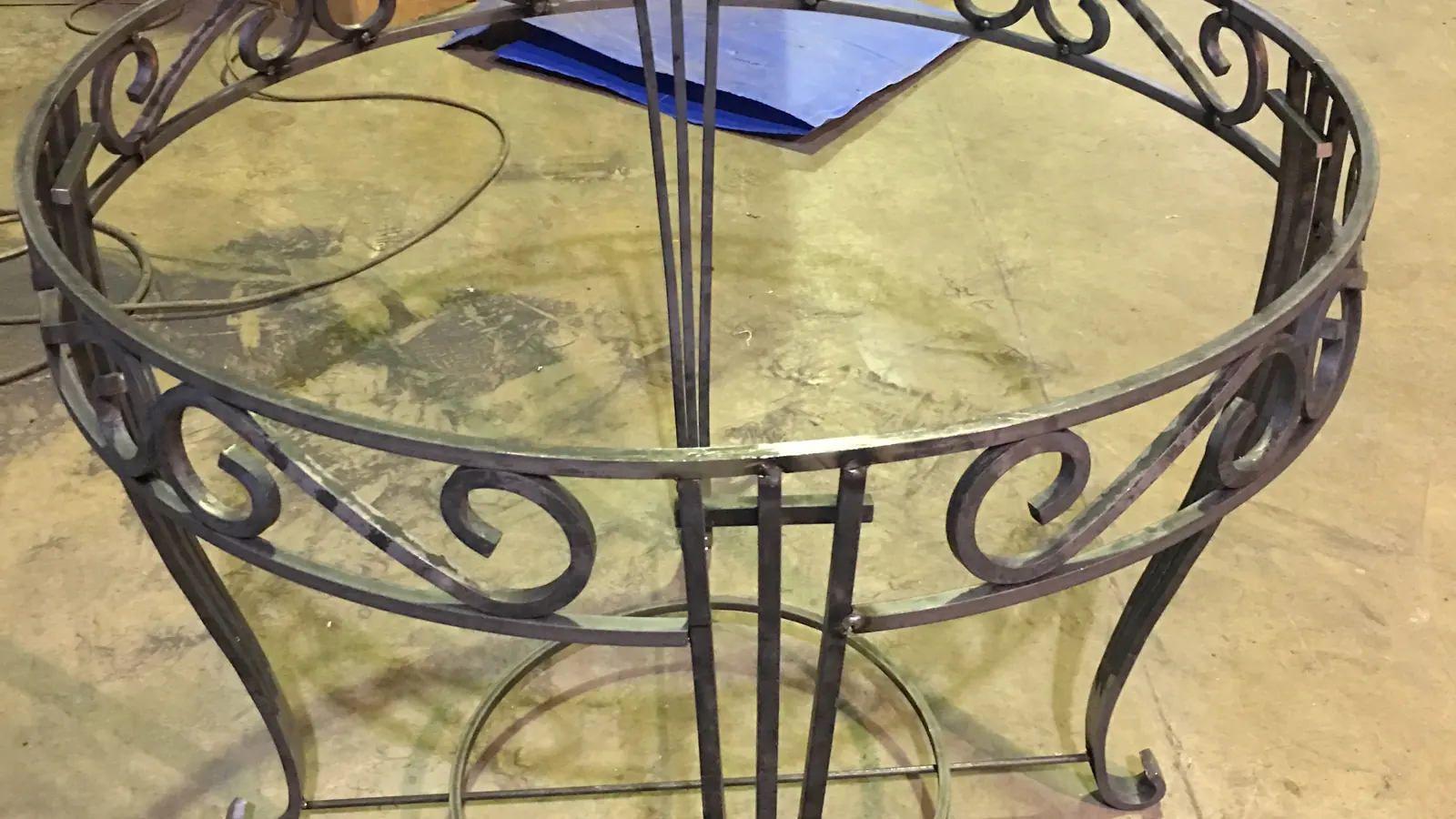
Rolled section bending
We bend rolled sections: the ones that form rings, railings, circular frames and structures that are not straight. It is a different process from plate rolling, which works on plate; here it is the bar that is bent.
Sections we bend
- Angle section (L): reinforcing rings, frames and surrounds.
- T-section: structures and reinforcements needing a perpendicular web.
- UPN channel: the most common for curved structures carrying some load.
- Flat bar: railings, curved stairs and trims.
Why section bending takes technique
Plate curves in one direction and behaves predictably. A section has flanges and a web, and when bent each part wants to go its own way: the outer flange stretches, the inner one compresses and the web tends to open or close.
A badly bent section is obvious to the naked eye: the flange ripples, the section deforms and the part doesn't sit flat. That is why the minimum radius of each section and its position in the machine matter.
Materials
Stainless steel, mild steel, galvanised steel and aluminium. These are the four materials we work with in all our processes.
70% of what leaves our workshop is stainless steel, so that is where we have the most experience. But your project need not be limited to it: many parts combine stainless with mild or galvanised steel, depending on the function of each section.
Where these parts end up
- Rings and reinforcements for tanks and silos
- Railings and handrails for stairs and walkways
- Circular frames and surrounds
- Curved structures for street furniture
- Machine frames and chassis
Quotation
Tell us the section and the radius
With the type of section, its size and the radius you need, we will confirm whether it can be bent and how.